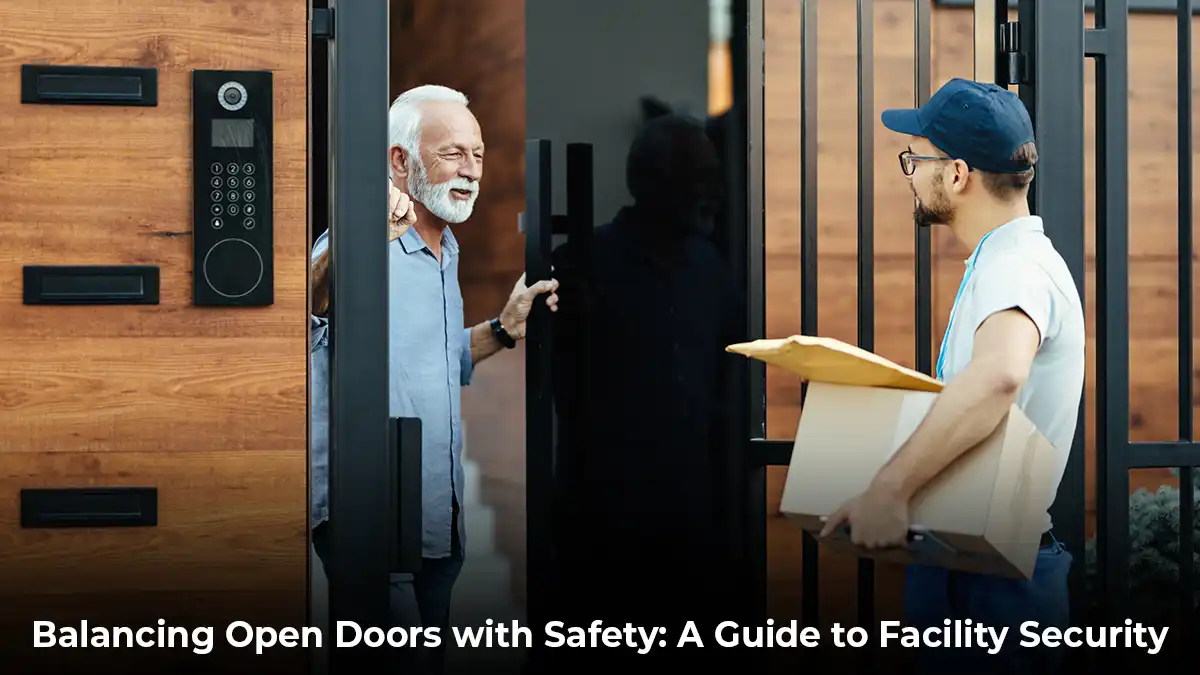
Creating an atmosphere that is welcoming comes from a deep commitment to making sure everyone feels safe. Everyone needs to feel they belong and can be themselves without feeling threatened or uncomfortable.
The Case For Layered Security
Layered security is a concept for how to best protect your property that’s sort of like how your immune system works: with several levels of defense. Rather than a single barrier that may or may not stop an attack, layered security provides systems to catch and prevent different kinds of threats.
Building a Security Team That Doesn’t Look Like One
An effective security team needs to constantly stay up to date with their training, and that requires commitment and consistency. You can’t have that if the people involved are more worried about their tactical gear than the woman who organizes the nursery asking them not to park so close to the door on Sundays.
The goal isn’t to build a team of operators. It’s to build a team of servants, people who happen to be trained, alert, and prepared, but whose first instinct is still to hold the door open for an elderly couple rather than scan the room for threats. That posture isn’t a weakness. It’s the whole point.
Churches are soft targets precisely because they’re open, welcoming, and trusting by design. A security presence that disrupts that culture doesn’t protect the congregation, it changes it. The best church security teams understand this tension and resolve it the right way: by blending in, building relationships, and earning the trust of the people they’re there to protect long before anything ever goes wrong.
That means volunteers who know the regulars by name. It means someone positioned near the children’s wing who the kids actually recognize and wave at. It means the person walking the parking lot on Sunday morning looking like they’re greeting arrivals, because they are. Visibility that feels like warmth is far more effective than visibility that feels like surveillance.
Tactical readiness still matters. Response protocols, communication systems, and situational awareness all need to be sharp. But those capabilities need to sit underneath a layer of genuine community presence, not on top of it. The moment a security team starts to feel like a separate group within the church, defined by their gear, their huddles before service, or their tendency to stand at the back with their arms crossed, they’ve already lost something important.
The best teams train hard and serve quietly. They know what to do if something goes wrong, and they spend most of their time making sure the people around them never have to find out.
Documentation as a Risk Management Tool
It’s estimated that almost 75% of houses of worship do not possess an official written security plan despite the increase in theft and vandalism occurrences in religious organizations (Brotherhood Mutual Safety and Security Report). This void creates substantial risk, not only in the event of a catastrophic loss.
Underwriters price a policy based on the risk one presents. A facility that can provide a documented vulnerability assessment, signed background check forms, training roster, and drill records looks very clearly like a different risk than one who doesn’t keep any of this. Records are how the courts assume “reasonable care”, the functional legal definition of duty of care in the majority of disputes. Intent isn’t good enough for an auditor or a plaintiff’s lawyer.
Vulnerability assessments don’t have to be complicated: Do the best you can at the time. Stuck on where to begin? Start with the building. Sidewalk to sidewalk, what can you find that’s not right? Propped side doors, unmonitored staircases, the fact that the exterior lights went out half a year ago, these are the kind of discoveries that get made but also can be fixed quite rapidly once discovered.
Closing the Gap With the Right Coverage
While physical security and administrative protocols reduce risk, they don’t eliminate it. A visitor can still slip on a wet floor, a volunteer may be accused of misconduct, or a fire can break out in your building during a community event. And when an incident occurs, you don’t want to find yourself financially vulnerable, or researching how other organizations similar to yours had to close their doors because they didn’t think beyond general liability coverage.
Commercial policies that don’t have ministry operations in mind won’t consider that your programming is volunteer-led, your facilities are used by a wide variety of groups including vulnerable populations, or that your liability risk is particularly related to the size and frequency of large gatherings. Church security insurance is written to cover these ministry-specific vulnerabilities that a generic policy may exclude or underinsure.
Making Security Feel Like Hospitality
The places that accomplish this don’t feel like fortresses. The precautions are there, but they’re woven into how the place runs rather than bolted on.
Greeters trained in situational awareness. A check-in system for kids’ ministry that’s essentially a normal drop-off process. Emergency exit signs that are easy to read but not massive. A medical response kit that’s easy to get to but out of sight. These are security. These are good operations.
How you talk about it matters with your team also. If your staff and volunteers perceive that security protocols are an extension of your care for them and the people they’re serving, sticking to the new culture is a lot easier. You have a foundation to talk through potential changes when everyone buys into the same mission.
Safe, caring spaces are constructed a little at a time, through numerous minor decisions. Most of those decisions actually cost less than the non-secure alternative.

I am a content writer with proven experience in crafting engaging, SEO-optimized content tailored to diverse audiences. Over the years, I’ve worked with School Dekho, various startup pages, and multiple USA-based clients, helping brands grow their online visibility through well-researched and impactful writing.